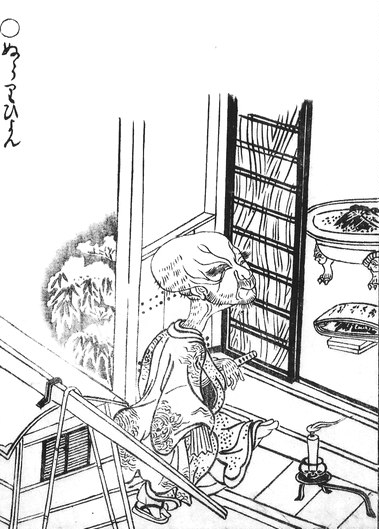
Nurarihyon
nurarihyon
Also known as: supreme commander of yokai
An old man who slips into homes uninvited and cannot be removed.
- Era
- Edo Period
- Region
- Nationwide
- Type
- House Yokai
Overview
The nurarihyon appears as a bald, gourd-headed old man who enters a home uninvited during the busy evening hours, settles into the best seat, drinks the household's tea, smokes their tobacco, and leaves before anyone notices — or before anyone finds the will to ask him to go. He causes no harm and takes nothing of value. He simply is there, as though he owns the place.
Name and Nature
The name nurarihyon connotes something slippery (nurari) and bobbing (hyōn) — something that cannot be grasped. The creature's defining trait is that it resists confrontation without violence, without threats, and without any apparent effort. Its authority is purely social: it acts like the master of the house, and somehow the house accepts it.
"Supreme Commander" — A Modern Invention
The title most associated with nurarihyon today — yōkai no oyakata or "supreme commander of all yokai" — was invented by Shigeru Mizuki for his manga GeGeGe no Kitarō. No pre-modern text grants nurarihyon this rank. Nevertheless, the title stuck, and nurarihyon is now almost universally depicted as a powerful antagonist who leads yokai against humanity. Knowing this distinction matters for understanding how yokai lore is continuously rewritten.
In Modern Media
Nurarihyon appears as a formidable villain in GeGeGe no Kitarō and as the central figure in Nura: Rise of the Yokai Clan (Nurarihyon no Mago), where his descendants lead a great yokai clan. The gap between the unremarkable Edo-period squatter and the modern warlord chieftain is a striking example of how popular culture transforms folklore.
Sources
- 『Konjaku Hyakki Shūi』 Toriyama Sekien (1781)
Related Yokai
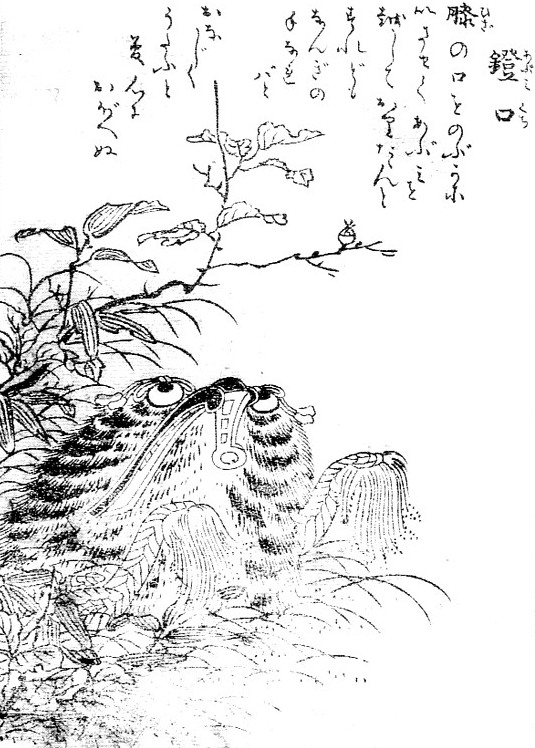
Abumi-guchi
abumi-guchi
A tsukumogami born from a horse's stirrup abandoned on a battlefield, still waiting for the master who never returned — grief and loyalty made monstrous.
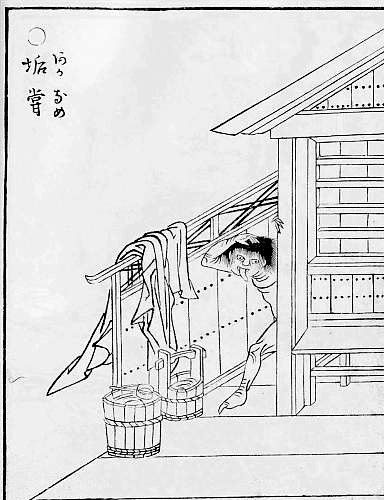
Aka-name
aka-name
A yokai that visits neglected bathrooms to lick up the accumulated grime and scum — harmless to people, but a vivid supernatural reminder to keep the bath clean.
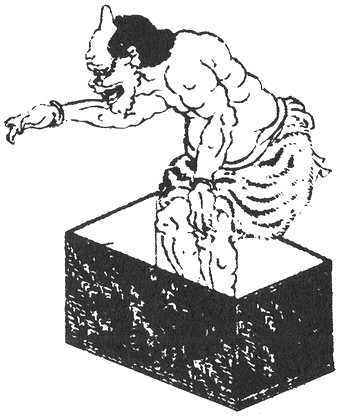
Amanojaku
amanojaku
A small, perverse demon that reads human hearts and does the opposite of what is desired. Famous as the villain of folk tales like Uriko-hime, and depicted in Buddhist sculpture as a creature trampled underfoot by guardian deities.