Oboroguruma
oboroguruma
Also known as: phantom ox-cart、misty cart
A ghostly driverless ox-cart said to haunt the streets of the Heian capital, drifting through the night trailing a scent of decay.
- Era
- Heian Period
- Region
- Kinki
- Type
- Undead、Road Yokai
Overview
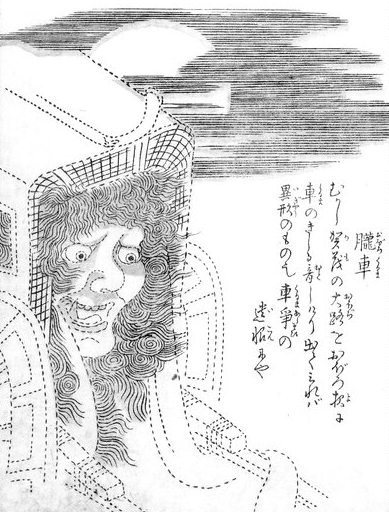
The oboroguruma ("misty cart" or "hazy carriage") is a spectral ox-cart that roams the avenues of the Heian capital without a driver. It appears in Toriyama Sekien's Gazu Hyakki Yagyō (1776) as one of the most visually arresting images in the collection: a decaying court carriage rolling through the dark, its bamboo blind concealing — or almost concealing — a massive, malevolent eye peering outward.
The Haunting
Two variants of the oboroguruma tradition exist. In the first, the cart is near-invisible, detected only by the wheel-ruts it leaves behind in the road — the carriage itself no more than a vague shape dissolving into fog. In the second, more visceral version, a rotting vehicle in advanced decay rolls through the streets trailing a stench of putrefaction.
In both cases, the cart has no discernible occupant — or rather, it should have no occupant. Sekien's genius was to suggest that something is watching from within.
Historical Context
In Heian-period Kyoto, the ox-cart (gissha or gūsha) was the transport of the aristocracy — a symbol of rank, refinement, and temporal power. For such a vehicle to appear as a wandering ghost implies a powerful irony: that all the pomp and status it once represented has curdled into something unclean and restless.
The word oboro — "hazy," "indistinct," evocative of spring moonlight through mist — is itself a term from classical Heian aesthetics. It encodes a bittersweet melancholy rather than outright terror. The oboroguruma sits at the intersection of beauty and dread that characterizes the finest Heian supernatural imagery.
Sekien's Masterpiece
Toriyama Sekien's illustration remains the canonical image of the oboroguruma. The great eye visible behind the bamboo blind captures the fundamental uncanniness of the yokai: a vehicle that should be empty is somehow inhabited. This single compositional detail transforms a ghost story about an object into something deeply unsettling — the sense of being watched from a place where no watcher should be.
Sources
- 『Gazu Hyakki Yagyō』 Toriyama Sekien (1776)
Related Yokai
Abumi-guchi
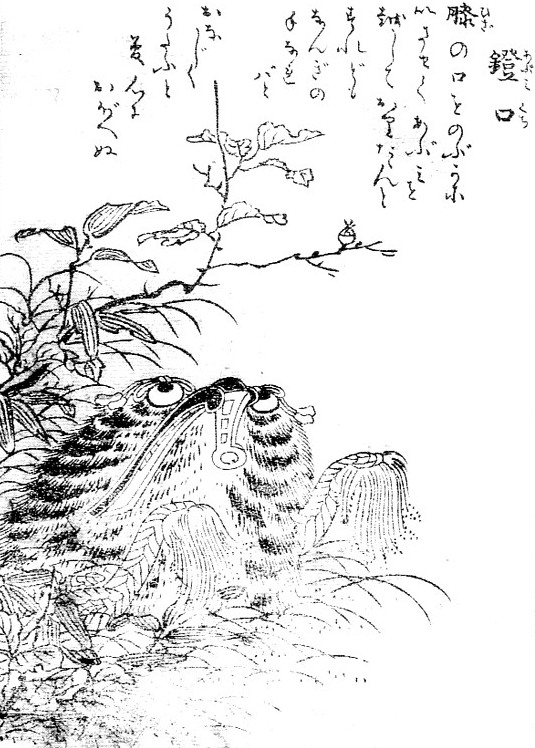
abumi-guchi
A tsukumogami born from a horse's stirrup abandoned on a battlefield, still waiting for the master who never returned — grief and loyalty made monstrous.
Abura-Sumashi
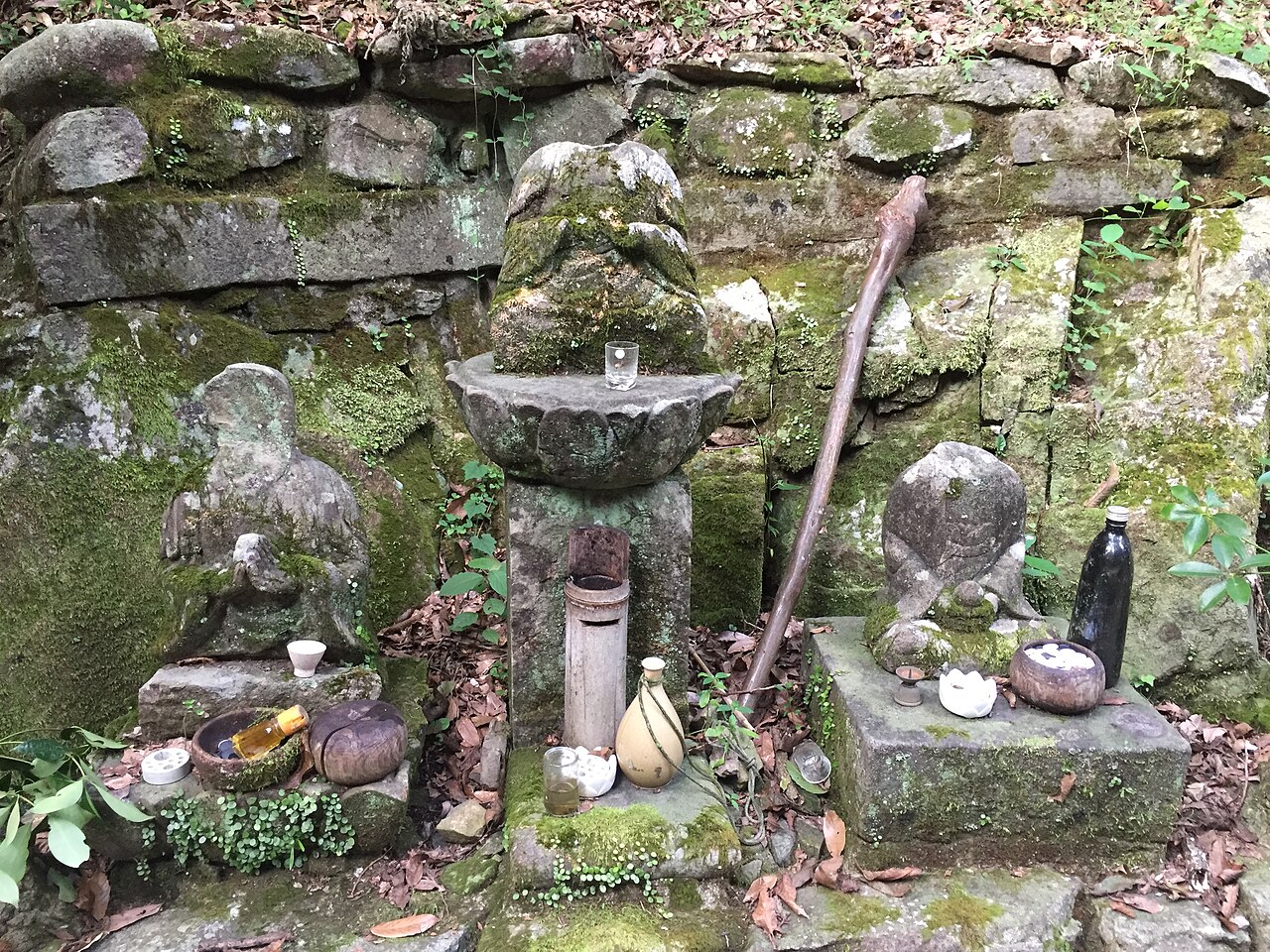
abura-sumashi
A straw-cloaked figure on a Kumamoto pass who declares his ancestor haunted it.
Aonyōbō
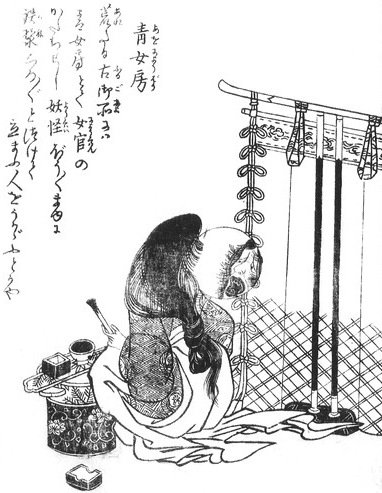
aonyobo
The spirit of a Heian court lady who haunts ruined aristocratic mansions, still applying her blackened teeth makeup centuries after her death.