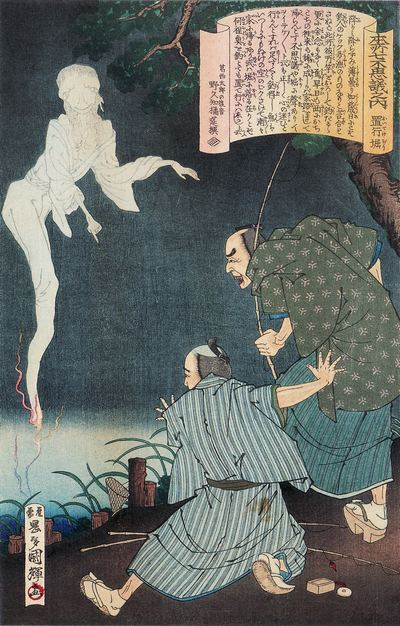
Oitekebori
oitekebori
Also known as: Oitkebori、The Leave-It-Behind Moat
A haunted moat in Edo's Honjo district where a ghostly voice cries "Leave it behind!" at fishermen trying to take their catch home.
- Era
- Edo Period
- Region
- Kanto
- Type
- Water Yokai、Undead
Overview
Oitekebori, or the "Leave-It-Behind Moat," is one of the most famous supernatural legends from Edo-period Japan. It originates from a moat in the Honjo district of Edo (present-day Sumida Ward, Tokyo) and is counted among the "Seven Wonders of Honjo" (Honjo Nana-fushigi). When fishermen attempted to leave after a day's catch, an eerie voice would rise from the water crying "Oiteke! Oiteke!" — "Leave it behind! Leave it behind!" — demanding the return of the fish.
The Legend
Those who ignored the voice and tried to carry their fish home reportedly suffered misfortune or found themselves unable to move. Some accounts describe the fishermen's baskets becoming inexplicably heavy or their legs freezing in place until they set down their catch. Those who obediently left the fish by the moat's edge were said to return home safely. The identity of the voice's source was never confirmed — some attributed it to a giant carp or freshwater creature, others to a kappa, and still others to a vengeful water spirit.
The Seven Wonders of Honjo
The Seven Wonders of Honjo is a collection of supernatural tales that circulated among Edo townspeople about the Honjo area. Alongside Oitekebori, the seven include phenomena such as the "Escort Lantern," the "Everlasting Flame," and the "Invisible Drummer." These legends reflect the anxieties and imaginative folklore that flourished during Edo's rapid urban expansion, when new neighborhoods were built over former wetlands and waterways.
Legacy
The word "oitekebori" has survived in modern Japanese as a colloquial expression meaning to be left behind or abandoned by one's companions — a linguistic fossil of the old ghost story. The Sumida Ward area still preserves historical markers commemorating the Seven Wonders, keeping the legend alive as part of local heritage. The tale stands as a remarkable example of how urban folklore in Edo transformed the fear of nature — particularly murky, unpredictable waterways — into moral narrative about respecting the boundaries between the human and spirit worlds.
Sources
- 『Kasshi Yawa』 Matsura Seizan (1821)
Related Yokai
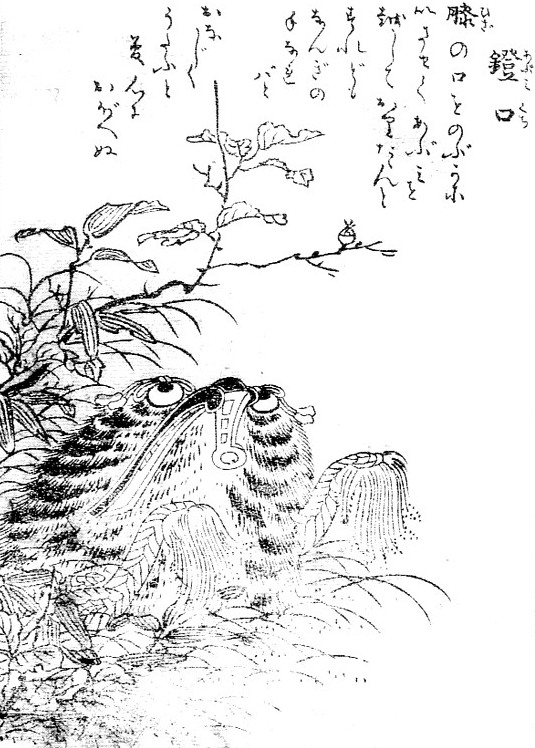
Abumi-guchi
abumi-guchi
A tsukumogami born from a horse's stirrup abandoned on a battlefield, still waiting for the master who never returned — grief and loyalty made monstrous.
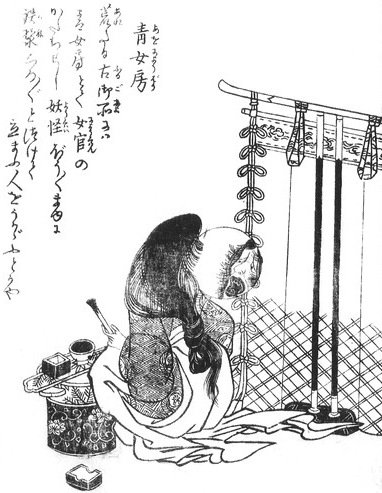
Aonyōbō
aonyobo
The spirit of a Heian court lady who haunts ruined aristocratic mansions, still applying her blackened teeth makeup centuries after her death.
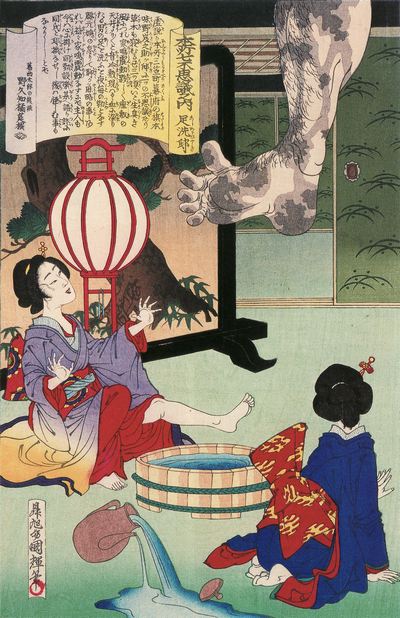
Ashiarai Yashiki
ashiarai-yashiki
A haunted Edo mansion terrorized by an enormous disembodied foot that crashes through the ceiling demanding to be washed. This famous Edo kaidan is one of Japan's most distinctively absurd ghost stories.