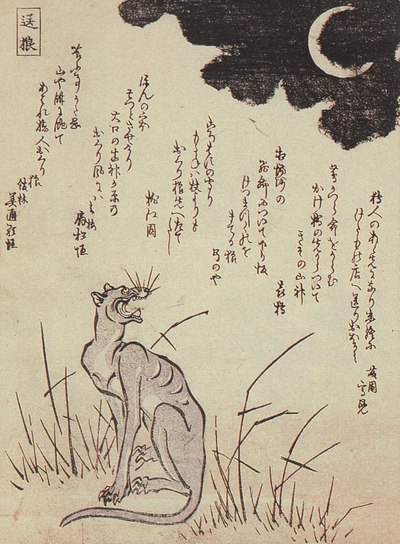
Okuri-inu
okuri-inu
Also known as: Sending Dog、Escorting Dog
A mysterious dog yokai that follows lone travelers along mountain paths at night. It will not attack as long as the traveler keeps walking without stumbling — but a single fall invites a lethal ambush.
- Era
- Unknown
- Region
- Nationwide
- Type
- Animal Yokai、Mountain Yokai
Overview
The okuri-inu — "sending dog" or "escorting dog" — is a yokai that silently falls in behind lone travelers on mountain roads at night and follows them without attacking, unless they stumble or fall. The creature's name describes its defining behavior: it "escorts" (okuru) the traveler, padding along behind at a measured distance. As long as the traveler keeps their footing and continues walking, the okuri-inu maintains its eerie distance. But the moment the traveler trips and falls, the creature attacks with lethal speed.
The legend also preserves a way to safely conclude the escort: upon arriving at the destination, the traveler should turn and say "thank you for accompanying me" (o-okuri arigatō gozaimashita). This expression of gratitude satisfies the creature, and it disappears. This double nature — dangerous predator and something almost like a guardian — makes the okuri-inu one of the more psychologically complex yokai in Japanese folk tradition.
The Mechanics of the Encounter
The encounter with an okuri-inu is governed by strict unwritten rules that shape the traveler's behavior. First: do not fall. The mountain path must be walked with absolute care and composure, regardless of how frightening it is to have an unseen creature following you in the dark. Second: do not run. Running might be interpreted as panic, and some accounts suggest it triggers an attack. Third: if you do stumble but catch yourself before fully falling, some versions of the legend suggest you have a chance to forestall the attack by quickly pretending to have meant to kneel down — reaching for something, or adjusting a sandal strap.
Finally, upon arriving safely at the end of the road — the edge of the forest, the village gate, a shrine — acknowledging the dog with gratitude is both a social courtesy and a supernatural necessity.
The Mountain Dog and Sacred Canines
The okuri-inu connects to a much broader tradition of sacred dogs and wolves in Japanese mountain religion. Wild mountain dogs (yamakari), and by extension wolves, were understood as the messengers and guardians of the mountain deity (yama no kami). Shrines dedicated to the "honorable dog" (oinusama) — actually worship of the now-extinct Japanese wolf — dot the mountainous regions of central Honshu, with Mitsumine Shrine in Saitama Prefecture being among the most famous. In this religious context, the okuri-inu is the shadow side of the mountain guardian: a being that protects the worthy but punishes the careless or disrespectful.
Regional Distribution
Okuri-inu legends are found nationwide but are most densely recorded in mountain-heavy prefectures such as Gunma, Nagano, Shizuoka, and Gifu. These traditions would have been most relevant to the traveling merchants, woodcutters, and pilgrims who regularly crossed mountain passes alone at night. The belief functioned as a practical warning — walk carefully, stay alert, show gratitude — embedded in a supernatural narrative.
Cultural Significance
The okuri-inu encodes a moral logic into the dangerous reality of night travel in mountainous terrain. It rewards steady nerves and courtesy, and punishes carelessness. This combination of danger, discipline, and the possibility of safe passage makes it a compelling figure in folk narrative — less a simple monster than a test of character imposed by the mountain itself.
Sources
- 『Kasshi Yawa』 Matsura Seizan (1821)
Related Yokai

Azuki-Babaa
azuki-babaa
A dangerous old-woman yokai who scrapes azuki beans in mountain streams. Related to the azuki-arai but more specifically formed and more actively threatening.
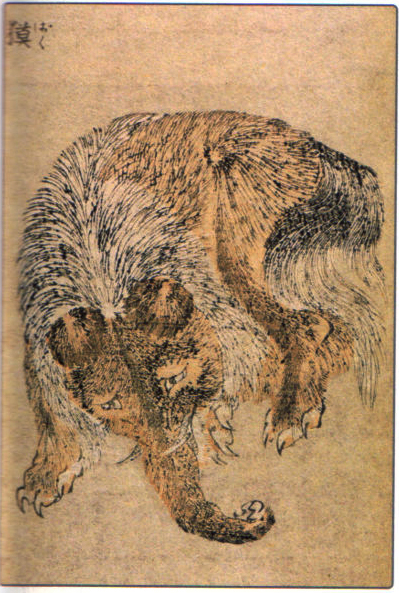
Baku
baku
A chimeric dream-eater invoked after nightmares to consume ill omens.
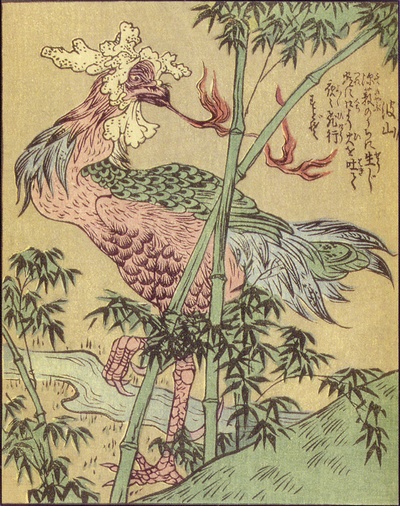
Basan
basan
A fire-breathing rooster yokai from the Kinki and Chūgoku regions of Japan. It appears at night with a distinctive flapping sound, breathes flames, and vanishes before anyone can get a clear look at it.