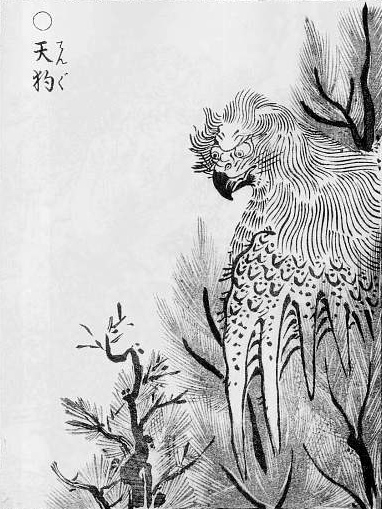
Tengu
tengu
Also known as: Dai-tengu、Karasu-tengu
A mountain spirit with a long nose or crow's beak, master of martial arts.
- Era
- Heian Period
- Region
- Nationwide
- Type
- Mountain Yokai
Overview
The tengu is a powerful mountain spirit deeply intertwined with Japan's tradition of mountain asceticism (shugendō). It appears in two main forms: the Dai-tengu (Great Tengu), a red-faced, long-nosed humanoid figure in mountain priest robes; and the Karasu-tengu (Crow Tengu), with a raven's beak and black wings.
Origins
The word "tengu" derives from the Chinese tiangou (celestial dog), but the Japanese tengu evolved into something quite different — a winged mountain spirit combining Buddhist, Shinto, and shamanistic elements. Early accounts in the Nihon Shoki describe tengu as ominous birds; by the Heian period they had become associated with proud monks who fell from grace.
Role in Tradition
Tengu were both feared and revered. They were said to abduct children (tengu-kakushi) and drive people mad, yet they also served as martial instructors. The legendary warrior Minamoto no Yoshitsune is said to have learned swordsmanship from the tengu of Mount Kurama — one of Japan's most enduring hero-origin stories.
The Three Great Tengu
Japanese tradition names three especially powerful tengu: the Sōjōbō of Mount Kurama, the Jirōbō of Mount Hira, and the Daiyama-bō of Mount Daisen.
Cultural Impact
Tengu imagery pervades Japanese martial arts, theater (Noh, Kabuki), and festivals. Their one-toothed wooden sandals (ippon-ba geta) remain an iconic symbol.
Sources
- 『Gazu Hyakki Yagyō』 Toriyama Sekien (1776)
- 『Konjaku Monogatarishū』 Unknown (1120)
Related Yokai
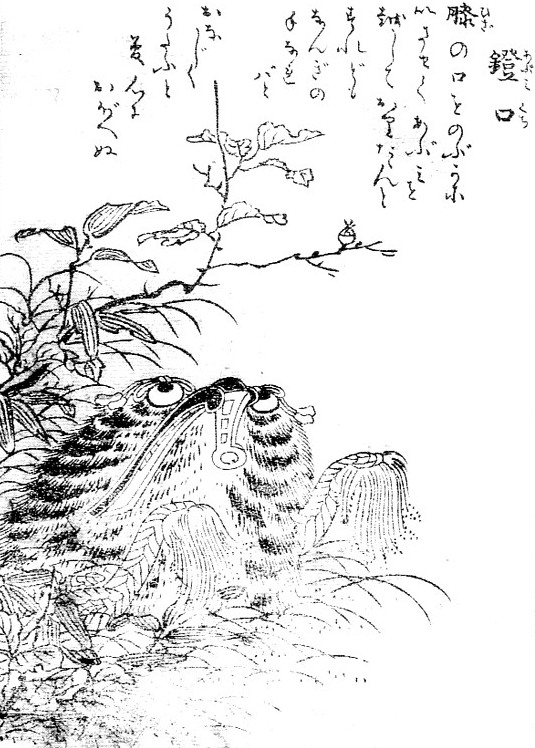
Abumi-guchi
abumi-guchi
A tsukumogami born from a horse's stirrup abandoned on a battlefield, still waiting for the master who never returned — grief and loyalty made monstrous.
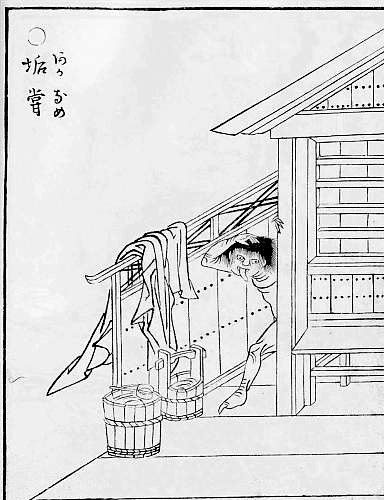
Aka-name
aka-name
A yokai that visits neglected bathrooms to lick up the accumulated grime and scum — harmless to people, but a vivid supernatural reminder to keep the bath clean.
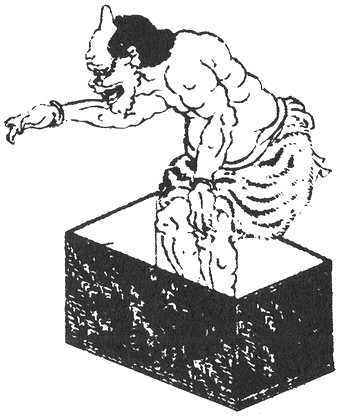
Amanojaku
amanojaku
A small, perverse demon that reads human hearts and does the opposite of what is desired. Famous as the villain of folk tales like Uriko-hime, and depicted in Buddhist sculpture as a creature trampled underfoot by guardian deities.