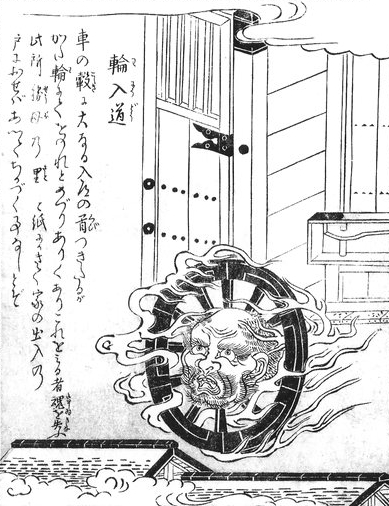
Wanyūdō
wanyudo
Also known as: wanyudo、wheel monk
A flaming wheel with a human face, rolling through the night to steal souls.
- Era
- Heian Period
- Region
- Nationwide
- Type
- Undead
Overview
The wanyūdō ("wheel monk") is one of Japan's most visually arresting yokai: a massive flaming wheel with a tormented human face — or upper body — embedded at its hub. It rolls through the night with a thunderous roar, snatching the souls of those it encounters and dragging them to hell.
Origins
The legend stretches back at least to the Heian period. The Konjaku Monogatarishū (c. 1120) contains accounts of wheel-like supernatural phenomena, and the wanyūdō is thought to be the spirit of a cruel ox-cart driver or a sinner condemned to an eternity of fiery torment. Toriyama Sekien's Gazu Hyakki Yagyō (1776) gave the creature its definitive visual form: a grimacing face wreathed in flames at the center of a spoked wheel.
Countermeasures
Folklore offers several defenses. Shouting "Ara mezurashi!" ("How unusual!") startles the wanyūdō and creates an opening to flee. Other traditions hold that displaying a woman's undergarment wards it off — a detail that speaks to the folk belief in the protective power of female garments against evil spirits.
Buddhist Symbolism
The flaming wheel is a potent Buddhist symbol of samsara — the endless cycle of death and rebirth driven by karma. A face trapped within that wheel visualizes the suffering of one condemned to repeat the cycle without release. For Edo-period audiences steeped in Buddhist cosmology, the wanyūdō was both a monster and a memento mori.
Sources
- 『Gazu Hyakki Yagyō』 Toriyama Sekien (1776)
- 『Konjaku Monogatarishū』 Unknown (1120)
Related Yokai
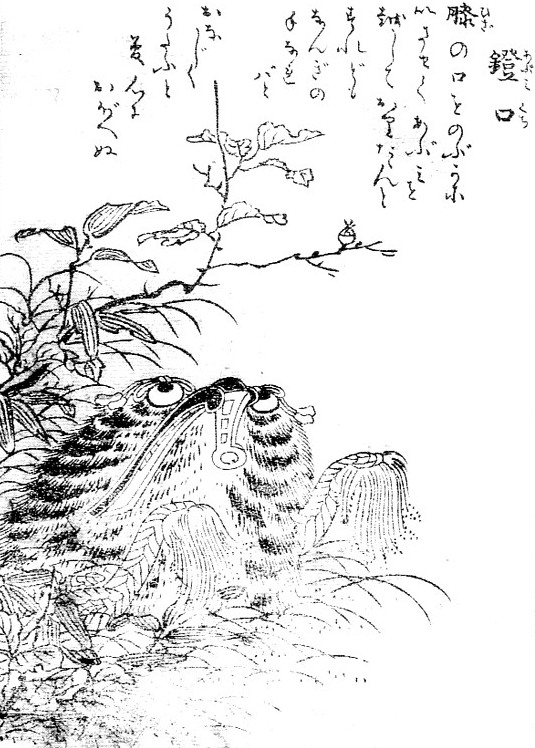
Abumi-guchi
abumi-guchi
A tsukumogami born from a horse's stirrup abandoned on a battlefield, still waiting for the master who never returned — grief and loyalty made monstrous.
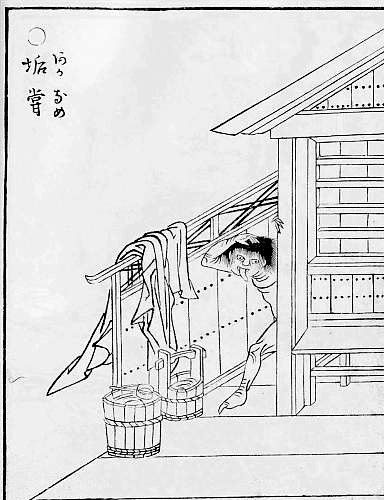
Aka-name
aka-name
A yokai that visits neglected bathrooms to lick up the accumulated grime and scum — harmless to people, but a vivid supernatural reminder to keep the bath clean.
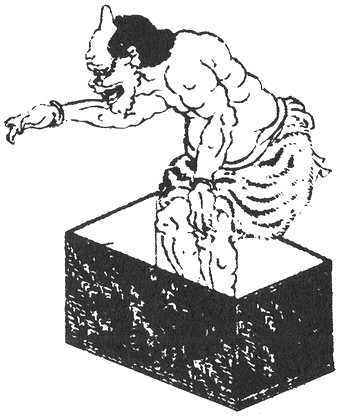
Amanojaku
amanojaku
A small, perverse demon that reads human hearts and does the opposite of what is desired. Famous as the villain of folk tales like Uriko-hime, and depicted in Buddhist sculpture as a creature trampled underfoot by guardian deities.